

Water Smart Communities
Embracing Water Stewardship for a Sustainable Future
A WSC is a place where water is central to the design, where people embrace the principles of water stewardship and where they are empowered by assets and systems to use water wisely and with care for the environment.

A blueprint for sustainable living with water
How we live with water shapes our social life, economic context and our environment. Entanglement between water systems and housing poses both sectoral challenges and is an opportunity to build resilient water systems into new homes.
Around the world integrated water management (IWM) initiatives offer alternative ways to sustainably manage water in housing. These interventions allow us to treat water where it falls, reduce flood risk and improve water quality. However, they are not yet mainstream in England and Wales, in part due to stewardship issues, static regulatory and policy standards and lack of affordability.
Water smart communities (WSCs) combine different elements of water management together with sustainable housing to support people and nature to thrive together for generations to come.
Some key features of WSCs are:

Informed by a common set of principles, such as care and respect for the water as a common good; consider water as integral part of good place-making and essential for the delivery of wider outcomes.

Created and stewarded by actors who collectively are equipped with the skills, capacity and agency that aligns with their risks, liabilities and duties.

Rooted in contextual knowledge and wisdom and encourage interactivity and feedback between people and their environment, to build a rich picture of how water is used, where it comes from and where it goes.

Place-based - a WSC will typically be associated with people living in a neighbourhood or development. However, definitions of community may not always be spatial, may be fluid and may vary over time.

Communities have agency and can shape their role in the process, inform identification of challenges and development of solutions.

Water smart outcomes, local benefits and wider value are created through their delivery.
WSCs create benefits across multiple systems.
The wider social, economic and environmental outcomes that might be delivered by enabling WSCs include:
Reconnecting communities and local environments
Creating a healthy water environment
Enabling understanding of the multiple values of water
Delivering sustainable water use
Lowering household bills
Delivering rich amenity
Contributing to housing quality and affordable housing
Designing for net zero
Delivering nature-based solutions
Supporting environment enhancement in a cost neutral way
Building community wealth
Improving biodiversity
Increasing resilience to climate change

Many frameworks articulate integrated water management (IWM). On this project we have used Arup’s Design With Water approach to illustrate place-based outcomes that can be supported through IWM, and delivered by WSC.
For a water smart community to exist and thrive, three building blocks need to be in place: assets, value and stewardship.

-
Values define the importance, worth or usefulness of something. They are crucial as they help to drive greater action between the hard boundaries of ‘must-do’, or ‘can’t-do’ statutory requirements. Increased value (both monetary and non-monetary) around water unlocks more of these ‘should-do’ and ‘could-do’ actions. Value sets can be expanded from individual to system-scale.
-
Assets can be physical and non-physical and exist at different scales, from a household or community to a water distribution and treatment network.
Conventionally, physical assets tend to dominate the water / housing delivery and are less focused on developing and maintaining social, organisational and governance structures as assets.
Asset management is critical for long-term sustainability. How assets are defined by different actors impacts what they design and value, how they invest, what they might own manage and maintain, and the returns they expect.
-
Stewardship is essential to looking after the common good of water. In a water smart communities context it encapsulates appropriate parties looking after water and water services to an appropriate level. This, in turn, is driven by principles; of strong culture, good governance and a clear understanding of desirable outcomes.

WSC actors and the role they play in the system.
EWSC is considering opportunities to expand the range of actors involved directly in enabling. For example, through greater awareness of water and integration of policy across government departments supporting those already involved through planning, strategy and legislation.
Currently, the number of actors with a direct responsibility for delivery investment, operation and maintenance of water smart assets is relatively small, though many actors play enabling roles. When considering how roles and responsibilities might change in the future, it is critical that these are aligned with capacity and capability to deliver critical water services and discharge associated risks and liabilities.
Building on the insights we've gained, we will explore and pilot how new roles, partnerships and stewardship agreements might enable EWSC, including scaling of innovative approaches within the community-led housing sector and elsewhere in the industry.
Case studies
Water Smart Communities (WSCs), or components of them, are being delivered in pockets all over the world. WSCs, as we define them, are novel for England and Wales. We have identified case studies which provide examples of how WSCs are being delivered, showing future possibilities for the UK.

Flood Resilient Repair House, Watford, UK
-
Changes to the design, layout and appliances in this home increase its resilience to the effects of being flooded.
Photo credit: BRE
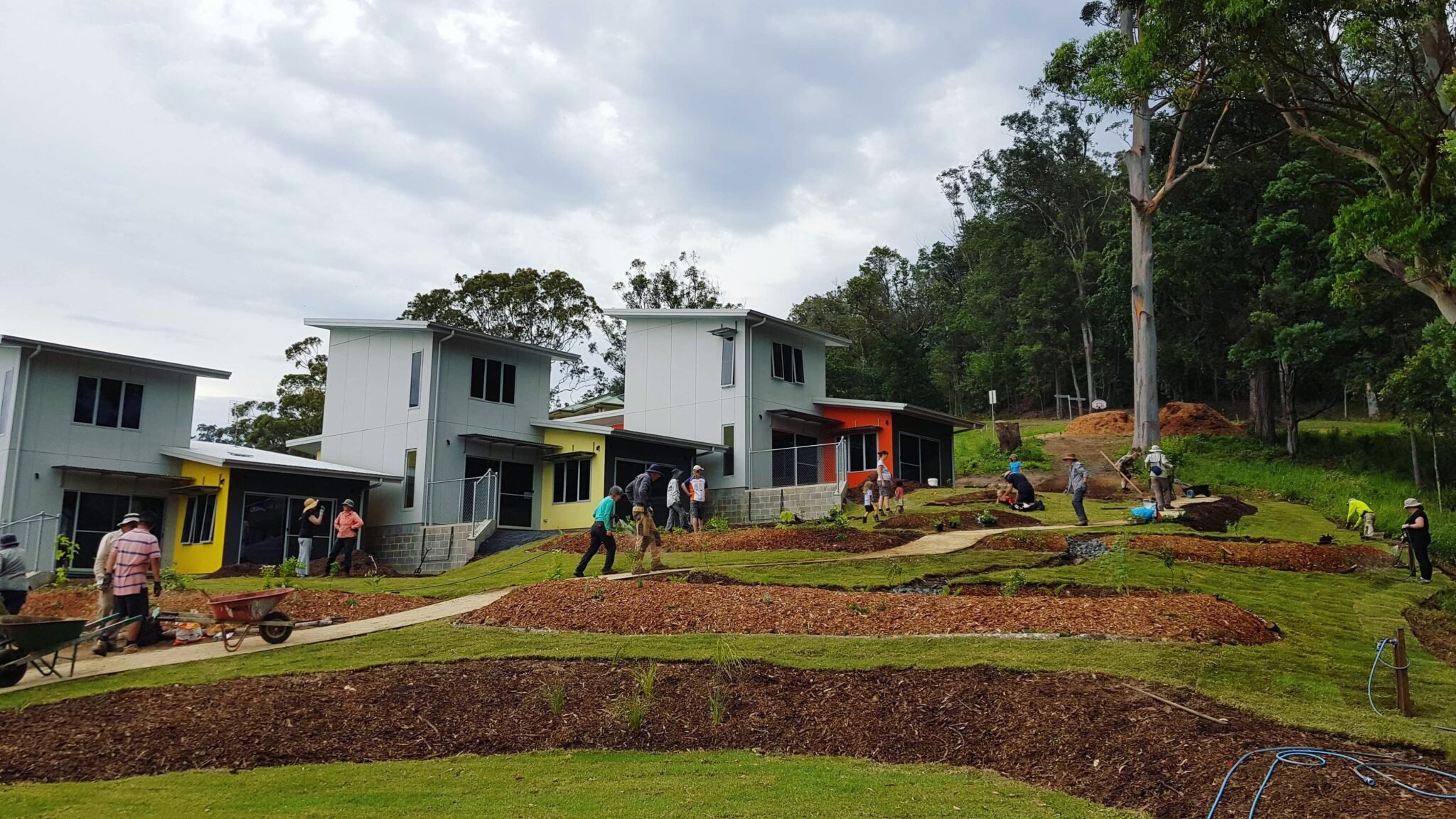
Narrara Eco Village, Sydney, Australia
-
This community led co-housing initiative recognises the importance of intergenerational living as embedding the principles of sustainability
Image credit: Lyndall Parris

-
Green roofs, tree lined streets and rainwater harvesting systems that divert roof water to communal planters, preservation of existing trees and planting of a wild meadow help to enhance biodiversity and enable greater interaction between residents and nature.
Photo credit: Scott Brownrigg
Cambium, Wimbledon, UK

White Gum Valley, Perth, Australia
-
Financial investments by local and state governments support the water-smart features of this residential development.
Image credit: Bioregional
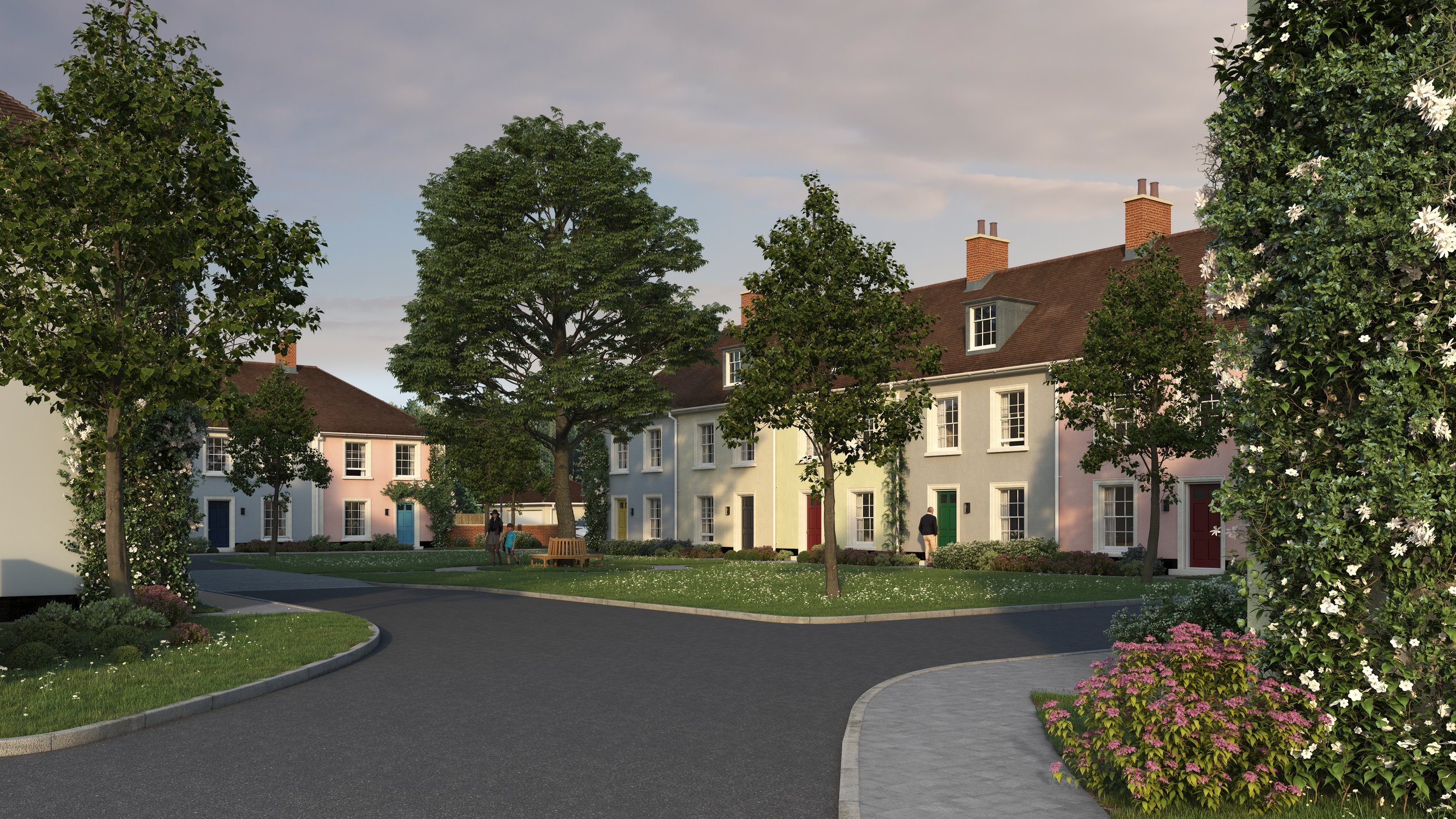
Welborne, Hampshire, UK
-
Each homeowner and commercial freeholder will become a member of Welborne Garden Village Trust. The Trust will be responsible for the long-term stewardship of public spaces, including green infrastructure.
Image credit: Welborne

Aquarevo, Melbourne, Australia
-
Changes to the design, layout and appliances in this home increase its resilience to the effects of being flooded.
Photo credit: BRE
Further resources

Explore our research findings through our publication series

Discover further EWSC resources