Enabling water smart communities through distributed ledger technology: How blockchain could transform water governance and collaboration
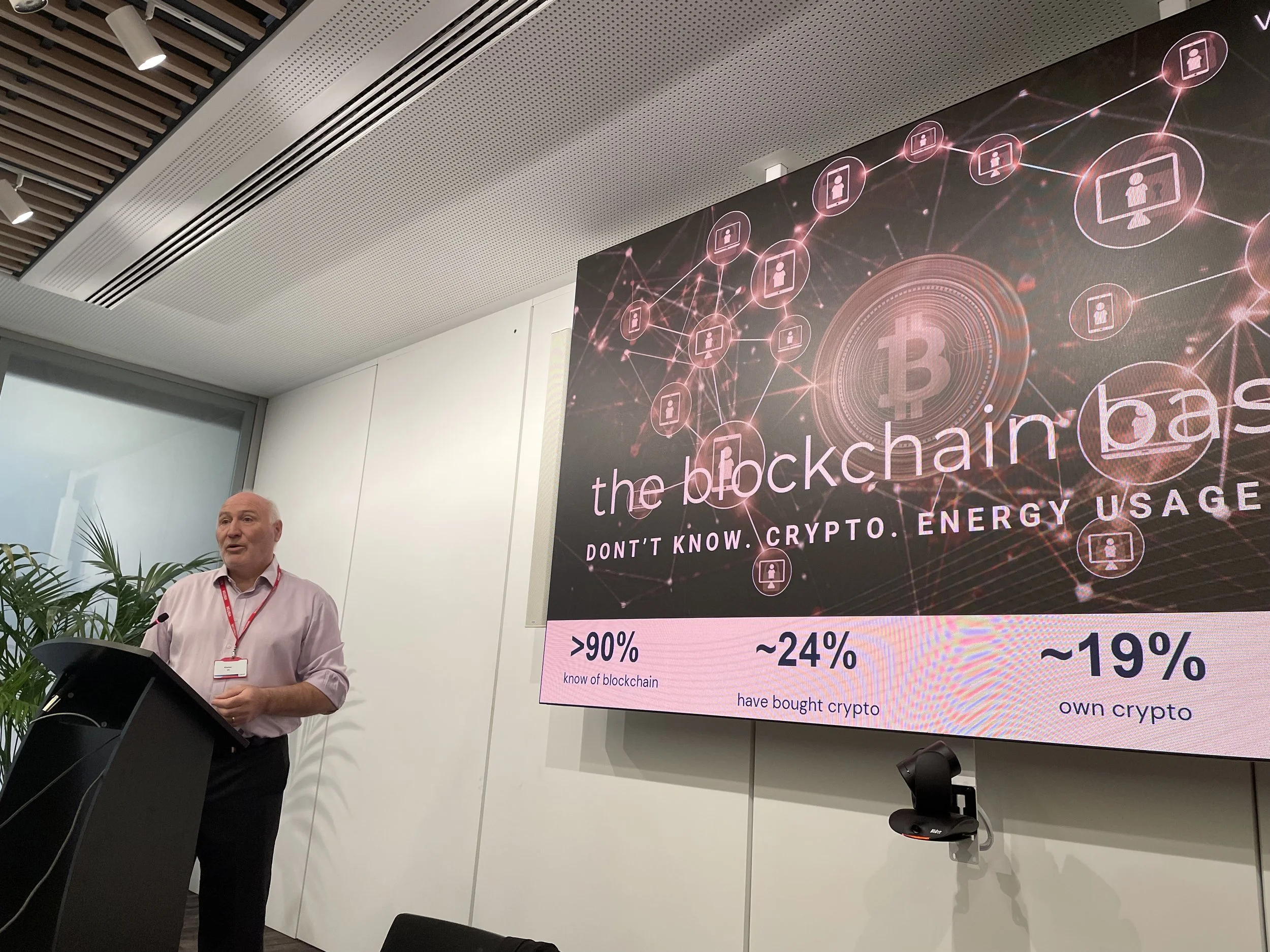
There is huge potential for ledger technology to solve water sector challenges but, first, we need to understand more about it. Our recent workshop on this topic was an open and collaborative forum offering an opportunity to learn together, exchange perspectives, and identify areas where this approach could be explored further within the water sector and beyond.
Distributed Ledger Technology (DLT), best known through its use in Blockchain, has the potential to address some of the most persistent challenges in the water sector. But realising that potential requires more than just access to the technology, it calls for a shared understanding and collaboration – across sectors and disciplines.
To explore this opportunity, we recently held an open and interactive workshop bringing together experts, innovators and enthusiasts from within and beyond the water industry. By bringing these people together we aimed to foster collaboration and innovation, paving the way for a more efficient and transparent water management future.
Workshop goals
The workshop set out to:
Build a general understanding of distributed ledger technology in the context of water management and how it relates to EWSC.
Identify and prioritise opportunities for how distributed ledger technology could enable WSC.
Agree on next steps and responsibilities to take the most promising opportunities forward. Build a general understanding of distributed ledger technology in the context of water management and how it relates to EWSC.
Workshop summary
Participants were guided through a series of steps to develop concepts for how ledger technology could be applied to solve water sector challenges.
Fraser MacLeod provided an introduction to blockchain using a Victoria sponge cake analogy to explain how layers of trust, verification and visibility all interact.
Attendees then split into three groups, to set out and prioritise the range of challenges that they thought might be supported by distributed ledger technology (DLT). Each group developed their top three suggestions into working concepts through facilitated discussion.
In the afternoon, the groups came together to present their concepts, with a lively debate taking place on the ideas and challenges generated. Attendees then voted on their top three priorities for future exploration.
What we learned
Strong Engagement and Problem-Focused Approach
Participation was energetic throughout. The novelty of blockchain in water governance proved refreshing, but conversations remained anchored in sector challenges, rather than technology.
Core Governance Needs Identified
Across discussions, the most compelling use cases focused on trust, transparency, and accountability. Participants saw blockchain as addressing governance gaps, and not just technical problems, helping to make accountability mechanisms explicit and verifiable.
"Enlightened Discomfort"
There was a clear recognition of transformational potential alongside palpable unease. All participants represent vested interests in current system, so there was a productive tension between excitement for innovation and discomfort with disruption.
Key Reservations
Several important reservations were raised:
A “Government-first” instinct: Desire for regulatory frameworks before implementation reflects deep sector conditioning
Concerns about equity and social justice: Valid concerns about access, concentration risk, and the ethics of tokenising essential resources
Perfection paralysis: a tendency to focus on how something couldn't work perfectly rather than test imperfect solutions.
Conclusions & next steps
The workshop revealed that the key opportunity for Blockchain in the water sector lies in user-first coordination – enabling collaboration and trust without waiting for top-down permission. But his demands a fundamental shift from “wait for permission” to “build and invite oversight” mindset.
Participants recognised that current systems are inadequate and government reform too slow, but instinctively still had the tendency to defer to government-led solutions.
We are excited to see how this conversation evolves, as EWSC continues to explore DLT’s role in three use cases identified.
—
You can read the full write-up of our workshop on distributed ledger technology here.
We also have an upcoming webinar on this topic. To learn more about the session, and to register, visit here.